

Shock news for the event industry: After 35 years, the visitor service software WinTHEA is ceasing operations. The “all-round ticketing genius” (which, by the way, is older than Google) is retiring together with its developer and managing director Dr. Jürgen Buchham (Source: Buchham). This raises a crucial question for many institutions: What are the alternatives to WinTHEA? How can the transition succeed without disrupting daily operations or damaging relationships with visitors? And what should be considered when choosing a new provider?
Silence at the ticket counters?
Check out our guide for cultural professionals to learn how to refill your venues through digitalisation, ticketing, and communication.
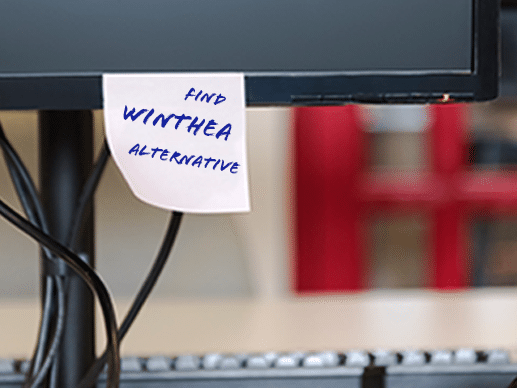
Why the transition from WinTHEA MUST be planned now
WinTHEA has proven itself in many cultural institutions: from ticket reservations to subscription sales, call center connections and access control. However, with the announced end of operations, urgent action is required:
- Technological future readiness: The ticketing system will be discontinued by the end of 2026. All customers must have integrated a new solution by then.
- Data security and transfer: All customer data must be migrated in compliance with GDPR.
- Planning security: Changing systems takes time and must be carefully planned. Ticketing must function long-term, as advance sales often begin over a year in advance.
Now is the right time to explore alternatives and start a structured migration process. In addition, this forced transition offers opportunities to take your ticketing to the next level.
What cultural institutions should look for in a new ticketing system
The necessary search for alternatives to WinTHEA now gives affected cultural institutions a valuable opportunity to reflect on whether their current ticketing and service model is still the best fit. Has your organisation grown so much that your in-house resources are stretched? – Then a switch to a full-service model might make sense. Do you want to reach more audiences and focus more on customer data, social media campaigns, and digital ticketing? Want to get hands-on behind the scenes? – Then Software-as-a-Service (SaaS) could be the business model to bring your events to the big stage. The world of ticketing offers a wide range of models worth exploring.
We all know: A theatre operates differently than a festival. An opera house has different needs than a city museum. Still, there are a few common criteria cultural institutions should consider when choosing a suitable ticketing solution:
- Subscription & discount models: Flexibly adaptable for complex pricing structures.
- Data ownership: Visitor data should remain with the institution or at least be accessible.
- GDPR compliance: Legal certainty in storing and using customer data.
- Online and mobile-first: User-friendly interfaces for digital sales.
- Access control: Integration of mobile tickets, QR codes, scanners.
- API interfaces and integrations: CRM, accounting, newsletter tools, etc.
- Reliable support: Especially important during migration and training.
- Transparent pricing: No hidden costs or fees.
Lost in choosing your ticketing and service model?
Our blog helps you understand the differences between ticketing models and shows what to look for to ensure your system fits your needs.
5 ticketing providers as WinTHEA alternatives
Here we present a selection of providers that are particularly relevant for the cultural sector and could be suitable successors to WinTHEA. Whether the service, business model, and features are right for you will require closer evaluation.
Tessitura Network
Profile:
Tessitura was originally developed with the Metropolitan Opera House in New York and is now used internationally by major cultural institutions. It combines ticketing, CRM, and fundraising in one integrated solution.
Features:
- Extensive ticketing functionalities incl. subscription management
- Target group-specific pricing logic & discount structures
- Comprehensive CRM functionality (e.g. donor management)
- Digital sales platform + interfaces to CMS & ERP
- Reporting tools for fundraising and audience analysis
- API connectivity with external systems
- Data hosting on client’s own servers or in the cloud
Special features:
Tessitura is particularly strong where ticketing, membership, donations, and marketing are tightly interwoven. The solution is powerful but complex – for smaller institutions, implementation can be costly and time-consuming.
egocentric Systems
Profile:
egocentric Systems specialises in ticketing solutions for the cultural and event sector. The cloud-based software is modular and flexibly adapts to the workflows of theatres, opera houses, and museums.
Features:
- Full subscription management (fixed-seat and choice subscriptions)
- Discount and concession logic for different target groups
- Mobile-optimised webshop incl. seat map integration
- Access control via app or scanning devices
- Integration of CRM, payment services, newsletter tools, etc.
- Data ownership remains with the organiser (GDPR-compliant)
- Support with migration & training, extensive help wiki
Special features:
The system was developed together with cultural institutions and covers sector-specific needs such as memberships, ticket reservations, donation integration, or special sales rights.
Thanks to its transparent pricing and individual support, egocentric Systems is particularly suitable for mid-sized to larger organisations with specific workflows.
Vintia (by SecuTix)
Profile:
Vintia is the version of the SecuTix platform specifically developed for cultural venues. It targets museums, historical sites, and organisers with high visitor numbers who need both timed and seat-based sales.
Features:
- Online and on-site ticketing with slot management
- Subscription functionality possible but limited
- Mobile ticketing, self-service kiosks
- Intelligent access control incl. group management
- Cloud hosting with GDPR standards
- Interfaces to tourism platforms, booking systems
- Business Intelligence dashboard
Special features:
Vintia excels in visitor management, especially for unticketed or non-seat-specific events. For theatres with complex subscription and pricing models, the system might be too generic. Ideal for museums or hybrid cultural offerings.
Reservix
Profile:
Reservix is one of the largest providers in the German-speaking market, offering a complete ticketing platform with self-service tools and a wide distribution network.
Features:
- Online and box office sales system with seat selection
- Standard subscription management, discounts, voucher system
- Access control incl. scanner devices and app
- Interfaces to accounting & CRM systems
- Own call center for ticket buyers
- Hosting in Germany, GDPR-compliant
- Broad reach through a large reseller network (e.g. ADticket)
Special features:
Reservix provides a solid, proven solution with wide market penetration. For smaller cultural venues, the broad focus may include unnecessary features; custom processes can be harder to implement.
Ticket Gretchen
Profile:
Ticket Gretchen is an Austrian start-up with a strong focus on mobile usage and user experience for cultural audiences. The platform was specifically developed for theatres, operas, and cultural events.
Features:
- Intuitive app-based sales platform
- Focus on single ticket sales and mobile ticketing
- Integration with box office systems possible
- Culture pass, student, and youth discounts
- GDPR-compliant, servers located in the EU
- Interfaces available on request
- Ticket purchase without registration
Special features:
Ticket Gretchen impresses with ease of use and an attractive user interface. The app is particularly well-suited for culture lovers under 40. For complex events with subscription or membership logic, the capabilities are currently limited.
The migration process: How to successfully switch from WinTHEA
A successful system migration requires time, careful planning, and a reliable partner. Here are the key steps to ensure a smooth transition:
- Analysis of current use: What modules and features are being used in WinTHEA?
- Requirements specification: What must the new system support? What functions are essential? Is new hardware required? What APIs are needed?
- Vendor selection: Based on cultural-specific requirements
- Data migration: GDPR-compliant and lossless
- Testing & training: Intensive preparation of your team
- Communication: Inform guests and subscribers about the change
- Go-live & monitoring: Launch with close support and feedback cycles
TIP: Allow enough buffer time before your first major event.
Our event experts estimate the migration process to take about three months, but this can vary depending on scope. You might consider testing the new system with a smaller event before going fully live.
Conclusion: Act now and take advantage
At first glance, the retirement of WinTHEA may seem like a setback – but it’s also an opportunity: Cultural institutions can modernise their processes, tap into new revenue potential, and expand their digital visibility.
Find out with our event experts what service scope best suits your cultural organisation and how to smoothly transfer your discount structure. Let’s talk in a free consultation!