

A system that can do everything: from ticket booking to admission control, from reporting to marketing? Sounds good. Maybe too good? “All-in-one” is not just a buzzword, but a concept that event organizers should understand, examine, and use strategically. It stands for profound change and new opportunities in the event industry.
We explain what’s behind all-in-one in event ticketing and what points event organizers should consider in order to exploit its full potential.
Tool jungle? No more!
Discover our success stories and see how all-in-one event ticketing can work in practice.

What does “all-in-one” actually mean in ticketing?
Imagine planning a trip and booking your flight, hotel, rental car, and excursions not through five different platforms, but from one central platform. You can see availability in real time, receive a single booking confirmation, and coordinate everything at a glance – simple, efficient, and stress-free.
That is precisely the idea behind all-in-one ticketing.
Instead of working with different individual solutions for ticket sales, admission systems, participant data, invoicing, and marketing, you can bundle all these functions into a single, integrated system. You can manage your entire event centrally: from the advance sales phase to the final evaluation after the last applause.
A good all-in-one ticketing system offers you:
- A continuous digital workflow without system breaks
- Real-time data and consistent information across all modules
- Automated processes that relieve you of manual work
- Full control over sales, visitor communication, and capacity utilization
- A central user interface for you and your team
The result: less effort, fewer frictional losses, and more time for what really matters: a powerful event experience for your audience and lasting success for you.
The 5 most important questions you should ask yourself as an event manager
Switching from a system with multiple specialized platforms to an all-in-one solution is a big step that involves a lot of organizational effort. So before you make a decision, ask yourself the following questions:
1. Which processes am I willing (and able) to centralize?
All-in-one ticketing is most beneficial when you can handle as many of your event processes as possible through a central system. These include, for example:
- Online and on-site ticket sales
- Participant and visitor management
- Admission control (mobile/stationary)
- Payment processing and invoicing (e.g., donations)
- CRM and marketing functions (e.g., newsletters)
- Event planning and resource management
- Reporting & business intelligence
So ask yourself beforehand which functions you absolutely need and which are nice to have, because the scope of all-in-one systems varies. They are not specialized solutions, but packages that enable you to use them consistently without media breaks, double data entry, or synchronization problems. A good system also has a modular structure, so you can add functions or service packages later on. So don’t let yourself be restricted by a system that is too narrow and rigid!
2. Is the system flexible enough for my formats and requirements?
Every event is different, and of course you want your event to constantly grow and expand. Your system needs to be able to handle that. A good all-in-one platform supports various formats, e.g., live events, hybrid formats, series events, festivals, etc. Depending on the type of event you are organizing, ask yourself questions such as:
- Can I map seating plans, time slots, or multi-day events?
- How well can the system be adapted to changing locations?
- Does the system also include suitable hardware?
- Can different event teams work simultaneously?
- Are there different authorization levels?
A good all-in-one ticketing solution grows with your event and offers you the right range of functions at all times. This allows you to use the system in the long term and avoid investing in a solution that slows down your growth or requires constant reconfiguration and isolated solutions.
3. How much control do I have over my data and branding?
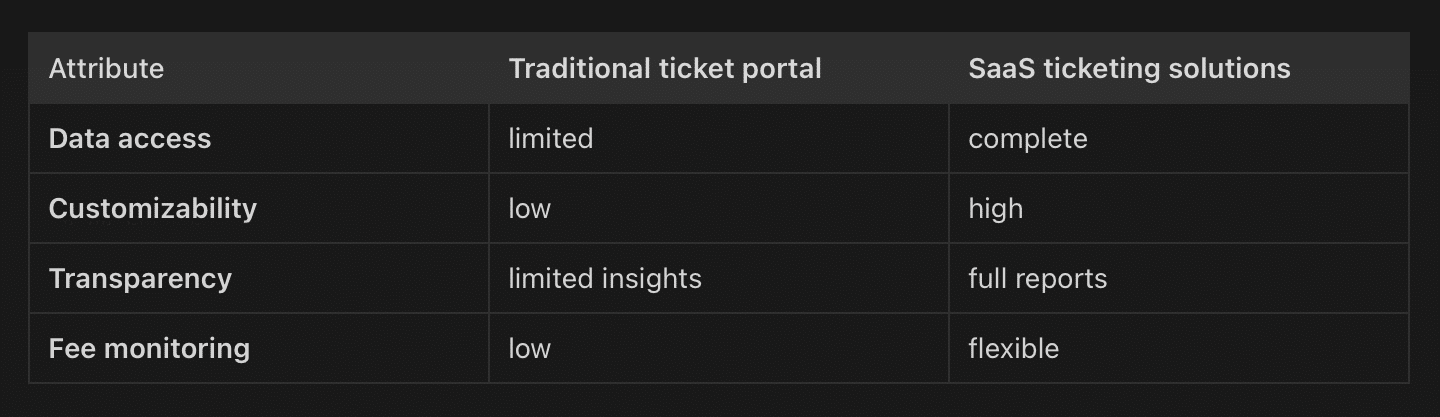
Your ticket shop is often the first real point of contact between your audience and your brand. That’s why you should rely on a system that is fully customizable – from its look and feel to the way it addresses customers. Create a professional image through a consistent customer experience and benefit from higher brand recognition. White label solutions are a good option here, for example.
Also, retain control over your customer data. You decide what happens to your visitors’ data. Gain insights from the sales data of past events and use these findings for new offers or marketing campaigns. However, make sure you comply with GDPR regulations!
White-Label ticketing seems interesting?
Find out everything you need to know about white labeling in your ticketing system in our blog article. What is it exactly, and how does it benefit you as an event organizer?
4. What happens if something doesn’t work?
With all-in-one ticketing, a lot of things run through a central platform. This brings efficiency, but also dependency. You have to be able to rely on your system, because a failure not only cripples one tool, but your entire event system. That’s why you need to know:
- How stable is the system under pressure (like when sales start or at the entrance)?
- Is there support that understands events, or just tech hotlines/chatbots?
- How fast do they respond in an emergency?
- How much training does the system require?
- Are there extra resources for smaller questions? (like tutorials, wikis, etc.)
Since you only use one application, synchronization problems are a thing of the past. For all other questions and technical problems, a good all-in-one ticketing system provides you with a contact person who knows the system inside out. Even if there are malfunctions or failures, you can get specific help here. Find out to what extent your staff needs to be trained and whether you can educate yourself or have to write to support for every little question.
5. How complicated is the transition and how much support will I receive?
The best platform won’t do you any good if you lose your nerve during the switch. Especially when moving several tools at once across different teams, things can quickly become stressful and confusing. Such a migration process costs you valuable resources, and you can’t afford to have the project fail due to excessive effort or a lack of cooperation among your staff. It’s therefore better if your provider supports you in this process. So check the following:
- Is there a clearly structured onboarding process?
- Who will help with data migration, training, and setup?
- How much internal effort will be required on your part?
A professional provider will support you strategically and technically with a team that is familiar with event processes, not just software. Make the transition phase as smooth as possible and counteract any resistance to the new solution within your team.
The all-in-one ticketing solution from egocentric Systems – the lever for your growth
The team at egocentric Systems understands the needs of event organizers in the fields of culture, sports, and live entertainment. Our all-in-one SaaS platform was specifically developed to offer event organizers maximum control, flexibility, and efficiency. With features such as customizable branding, seamless integration, and real-time reporting, it is the ideal solution for anyone who wants to get more out of their ticketing.
- CRM, payment processing, ticket shop, POS system, marketing tools, and much more in one event ticketing software
- Compatible hardware
- Scalable solution with various service packages
- Support from a personal contact person
- Onboarding, training, and help articles
- Design freedom thanks to white label approach
- Complete customer data sovereignty
Warum All-in-One Ticketing mehr ist als Tool-Zusammenführung
If you want to not only manage your events but also run them strategically, all-in-one ticketing is not just a nice-to-have, but a true secret weapon. It combines technology, strategy, and convenience in one platform. All-in-one ticketing systems not only bring order to the process, but also open up new possibilities:
- Centralization: fewer tools, more focus
- Automation: increased efficiency thanks to fewer manual tasks
- Transparency: real-time metrics for faster, data-driven decisions
- Flexibility: adaptable to any event format and size
- Brand strength: professionalism through individual, consistent branding
Our team looks forward to supporting you! Schedule a non-binding appointment with our event experts now.
your questions.
- Can I combine existing systems or tools with an all-in-one solution?
Yes, absolutely. A good all-in-one ticketing platform is modular and open to interfaces. At egocentric Systems, for example, we integrate CRM, accounting, or marketing tools where appropriate. You don’t have to change everything at once – we design the transition to suit your setup.
- What happens if my event grows – will the system still be sufficient?
That’s exactly what All-in-One Ticketing is designed for. Whether you’re planning more events, more visitors, or new formats, the system grows with you. You can add modules, create new user roles, or expand functions at any time. Scalability is not a promise for us, but standard.
- How long does it take to switch to an all-in-one system?
That depends on the complexity of your current setup. Our team will guide you step by step, ensure smooth data migration, and provide you and your team with comprehensive onboarding.
- Isn't an all-in-one ticketing system more expensive than individual tools?
Not necessarily. If you offset all running costs (including time expenditure) for individual solutions, you often save significantly. You also avoid duplicate licenses, manual errors, and tedious coordination between tools. You only pay for what you really need – transparent and modular.
- How customizable is the system to my branding and requirements?
Highly customized. Your ticket shop runs in your design, your communication carries your tone, and your event gets the stage it deserves. No “off-the-rack” but a platform that strengthens your profile instead of overshadowing it.
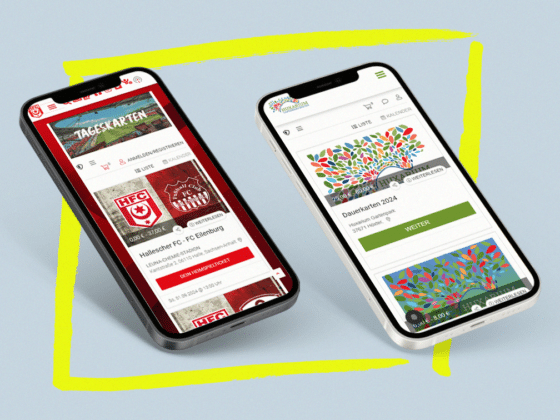
White Label Ticketing: The Solution for Personalized Ticketing Systems
READ NOW

Was Veranstalter über Software as a Service (SaaS) im Ticketing wissen sollten
READ NOW